
Medieval Tirana- The Complex of Mosque and Clock Tower
At the beginning of the 19th century, Tirana became an arena of rivalry between the Toptani family and the Bushatllinj of Shkodra, who were competing for greater control over the city.
The most prominent Tirana personality during this period of conflict was Haxhi Et’hem Bey, son of Molla Bey, who had been appointed by the Sublime Porte to govern Tirana. As a descendant of the Bargjin family line, he was responsible for several important architectural works in Tirana, the most significant of which is the mosque that still stands today in the heart of the capital.
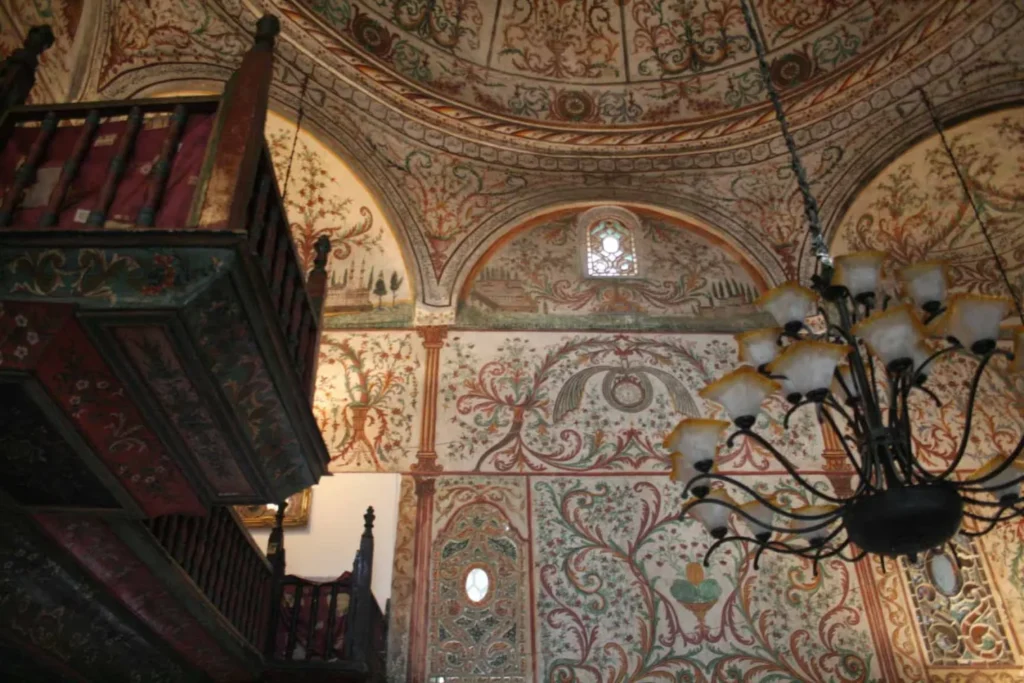
In fact, the foundations of the mosque had been laid by his father, Molla Bey. Haxhi Et’hem Bey continued the work and completed the mosque, including its remarkable decorations, in **1823**. After completing the mosque and its prayer hall, he also built the Clock Tower, which has since become one of the most recognizable symbols of Tirana.
The exact dates when construction of the Clock Tower began and was completed are not known. It is believed that Et’hem Bey financed its construction with his own funds, while the citizens of Tirana contributed to its completion.
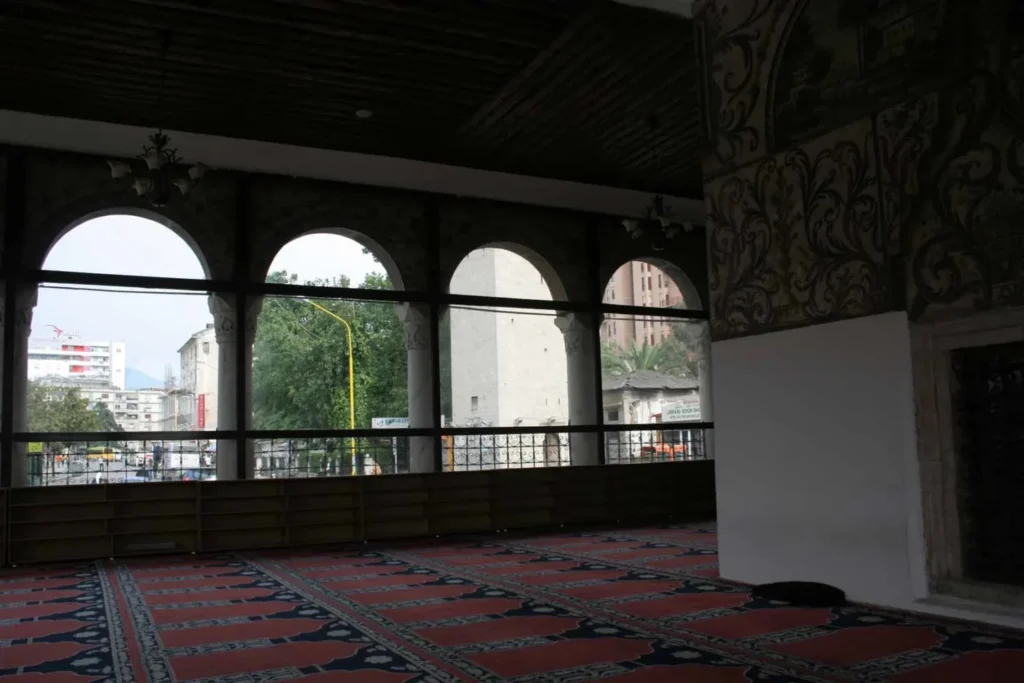
While Et’hem Bey was carrying out these architectural works, the Toptanis once again took control of Tirana and became involved in renewed conflicts with the Bushatllinj. Haxhi Et’hem Bey was eventually dismissed by the Sublime Porte and did not continue to participate in the affairs of the city or in the projects he had initiated. He remained under Toptani rule and withdrew from public life until his death in **1848**.
Other construction works in Tirana were generally not associated with a particular individual. For example, the Terzi (tailors’) guild commissioned the construction of the Tabak Bridge over the Lana River, at the beginning of the road leading toward Shën Gjergj (today’s Ali Demi area).
The three-arched bridge, built in the 17th century, connected the center of Tirana with the Tabak neighborhood, where the Tabak Mosque was located, and with the mountainous area surrounding Tirana.
Other buildings were known by the names of the families associated with them, such as the Karapici Mosque, reflecting the important role that prominent families and guilds played in the architectural development of Ottoman Tirana.
By 1881, Tirana had become one of the most important cities in Albania. Although it was still a sub-prefecture within the Prefecture of Durrës, its population was approximately three times larger than that of Durrës.

In a letter sent to Vienna on 20 April 1881, the Austro-Hungarian Consul in Durrës, Oculli, reported that Tirana had around 2,200 houses, compared with only 740 in Durrës. He suggested that it would be appropriate to move the prefectural center to Tirana, noting that the city offered large residences suitable for government officials, an abundant supply of drinking water, and a very favorable climate.
As historian Kristo Frashëri records in The History of Tirana (p. 290), these characteristics gradually contributed to the idea that Tirana could become a suitable administrative and eventually political center.
Tirana’s advantages were not limited to its population and climate. The city had abundant water resources capable of supporting a large population, while its geographical position made it a natural crossroads, connecting routes from north to south and from east to west.
These geographical, environmental, and infrastructural advantages would later become important factors in Tirana’s emergence as the capital of Albania in 1920.
Tags:

Other News to Read
Tirana Heritage Routes: 5+1 New Ways to Discover Tirana Beyond the City Centre
he Tirana Heritage Routes project presented five new thematic routes combining history, culture, heritage, nature, and local communities…
What to do in October 2026 in Tirana
Tirana, Hello Autumn! Welcome October! October in Tirana is a vibrant, colorful month — a lovely fusion of…
What to Do in Tirana in September 2026
What to do in September 2026 in Tirana . The month of Festivals and cultural activities
Tirana Castle: A Fortress with Ancient Roots
Tirana Castle: A Fortress with Ancient Roots. t is traditionally said to have been built in the 18th…