
17 November 1944 – The Liberation of Tirana
From fierce street battles to the German withdrawal: the story of Tirana’s liberation at the end of the Second World War.
On 17 November 1944, Tirana was liberated from German occupation, marking one of the most significant moments in the city’s history during the Second World War. After almost five years of foreign occupation, first by Italy and then by Germany, the Albanian capital experienced days of intense fighting, destruction and sacrifice. The Battle of Tirana lasted 19 days and took place in the city’s streets, neighbourhoods and surrounding areas. The liberation marked not only the end of German occupation in the capital but also a decisive moment in the final stages of the Second World War in Albania.
Albania Under German Occupation
Albania was invaded by Fascist Italy on 7 April 1939. Following Italy’s surrender in September 1943, German troops entered the country and took control of Albanian territory. Germany formally presented Albania as an independent and neutral state, but in reality, the country was under German military control. During this period, the antifascist movement and armed resistance intensified. Clashes between German forces and resistance formations spread across different parts of the ountry. By the autumn of 1944, as German troops were withdrawing from the Balkans, Tirana had acquired particular strategic importance. Control of the capital was crucial to Albania’s political and military future.
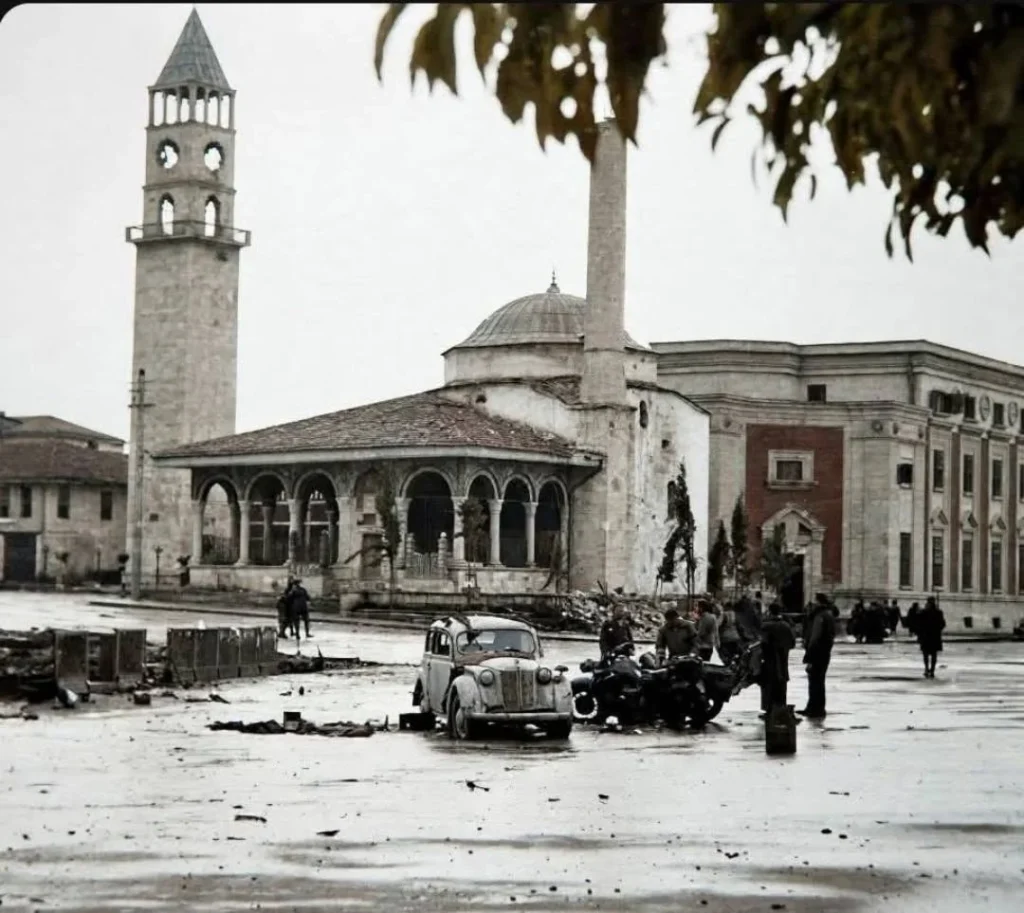
The Battle of Tirana: 29 October – 17 November 1944
The operation to liberate Tirana began on 29 October 1944, involving formations of the Albanian National Liberation Army. Partisan forces, organised into several brigades and military units, confronted the German garrison defending the capital and its strategic positions. The operation was led by the First Assault Corps, while Mehmet Shehu, commander of the First Assault Division, played an important role in directing the fighting. The operation unfolded in several phases, with clashes spreading across different parts of the city. Public buildings, main roads, bridges and strategic positions became centres of intense fighting. The battle was not confined to central Tirana. The surrounding areas were also of considerable importance, as control of supply routes and communication lines directly influenced the outcome of the operation. One of the most significant confrontations was the Battle of Mushqeta, on 13–14 November 1944, when partisan forces attacked a German column attempting to advance towards Tirana. After 19 days of fierce fighting, German resistance in the city came to an end.
17 November 1944 – Tirana Is Liberated
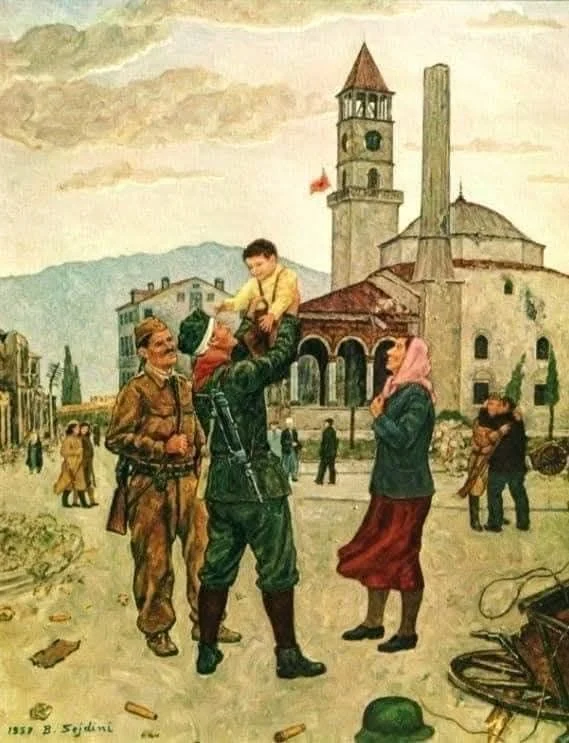
On the morning of 17 November 1944, German forces withdrew from Tirana, and the city was declared liberated. It was a moment of extraordinary importance for the capital’s residents, who had endured months of insecurity, repression and violence. Radio Tirana, one of the strategic targets during the fighting, broadcast the news of the city’s liberation. The radio announcement, followed by the Albanian national anthem, became a symbolic moment for the capital. However, liberation came at a heavy human cost. The fighting claimed the lives of partisans, German soldiers and civilians. Many residents lost their lives, while several parts of the city suffered considerable damage. Historical sources report different casualty figures, and these numbers should therefore be treated with caution.
Tirana After Liberation
The liberation of Tirana marked a turning point for the country. The city became the political and administrative centre of Albania as it emerged from the war. On 28 November 1944, eleven days after the city’s liberation, the Democratic Government of Albania and the Presidency of the Anti-Fascist National Liberation Council officially entered the capital. Meanwhile, fighting continued in northern Albania. Shkodra, the last major city held by German forces, was liberated on 29 November 1944. This date subsequently became Albania’s Liberation Day.
A History That Lives in the City’s Memory
Today, 17 November remains an important commemorative date for Tirana. It recalls a dramatic period in the city’s history, the people who lost their lives and the profound political and social changes that followed the war. Traces of this period remain in historical archives, wartime photographs, military documents and the memories preserved by Tirana’s families. Understanding the liberation of Tirana also means understanding Albania’s history during one of the most difficult periods of the 20th century. 17 November 1944 – a date that remains an inseparable part of Tirana’s history and identity.
Tags:

Other News to Read
17 November 1944 – The Liberation of Tirana
17 November 1944 – The Liberation of Tirana
28 November 1912 – The Day That Changed Albania’s History
28 November 1912 – The Day That Changed Albania’s History
Identification and Documentation of Tirana’s Intangible Cultural Heritage
Identification and Documentation of Tirana’s Intangible Cultural Heritage”, implemented by DMO ALBANIA and funded by the Ministry of…
What to do in November 2026 in Tirana
Festive November or Red and Black month. The month in which Albanians celebrate their Independence Day and Liberation…