
Why the Zvërnec Project Does Not Benefit Albanians
The definition of sustainable tourism, which the UN and the EU have been promoting for over a decade, can be summarized in a single sentence: tourism that minimizes negative environmental impacts while maximizing benefits for local communities.
The latest tourism resort model proposed by our Prime Minister in the Narta area meets neither of these conditions. On the contrary, it does the opposite. This model harms the environment, as the enclosed area includes protected land, which Parliament quietly opened to construction through Law 21/2024. At the same time, it brings no concrete benefits to local residents, with whom no meaningful consultation was held, despite the fact that many of them are involved in lengthy court battles over overlapping property claims.
I do not wish to focus here on Sazan Island, which is not only a tourist destination and an inalienable public asset belonging to all Albanians—as much mine and yours as it is Rama’s—but also a military territory of strategic importance linked to our national security. Other institutions should address the Sazan issue, although Ivanka Trump recently referred to it on television as an island she had personally “discovered,” turning the subject into a global meme.
Returning to the private investment model promoted by the Prime Minister, this misleading formula—where citizens are presented only with impressive investment figures—is neither new nor successful. The offer made to Albanians is humiliating: even if you own land or property, even if you are involved in court proceedings because of failures created by successive post-transition governments, you can never truly be owners; you can only be workers.
Instead of helping its citizens develop their own properties through incentives, architectural planning, environmental safeguards, infrastructure, roads, signage, and tourism facilities, the state chooses another arbitrary path. Through various mechanisms—and one need only look at what has happened with the property registry in Vlora and elsewhere—it takes the land, hands it over to foreigners through companies often registered offshore with minimal capital, and then sells “jobs” as the only form of development available to local citizens.

We are all witnesses to the fact that property rights have been the cancer of the last thirty years in Albania. Those with political power have corrupted judges and manipulated ownership records, seizing valuable coastal land and turning it into resorts, while ordinary citizens wander from court to court seeking justice. Among the beneficiaries of this chaos are politicians and judges themselves, making them accomplices in the problem.
The situation became even clearer during the Prime Minister’s recent meetings with landowners in Zvërnec. One resident told him directly: “I have a court hearing tomorrow regarding my property there. What happens if I win? And who compensates me for all the taxes I have paid on that land until today?”
The Prime Minister’s answer was revealing. While claiming not to comment on court decisions, he stated that the investment would proceed regardless and that the resident would receive compensation from whoever lost the case. But what if the landowner does not want compensation? What if all he wants is his land back?
Residents also raised allegations that the supposedly lawful owner of much of the territory is an international drug trafficker. If true, this suggests that properties may have been taken through processes that deserve urgent investigation and that could ultimately undermine the entire project.
Palasa: The Parallel Village That Drained the Original One
The controversial Strategic Investments Law has created a class of coastal developers who receive roads, tunnels, water systems, electricity networks, helicopter pads, and even airports—funded by taxpayers.
Palasa is a typical example of uncontrolled development in an area lacking water resources. A new village was effectively created alongside the existing one. The government built roads and a tunnel—currently under investigation by SPAK for alleged corruption—while water was redirected to the new resort, leaving older settlements such as Palasa and Dukat struggling with shortages.
A friend living in the old village of Palasa asked me to write about this issue two years ago because conditions had become extremely difficult due to water being diverted to the resort. So what exactly did local residents gain from this strategic investment?
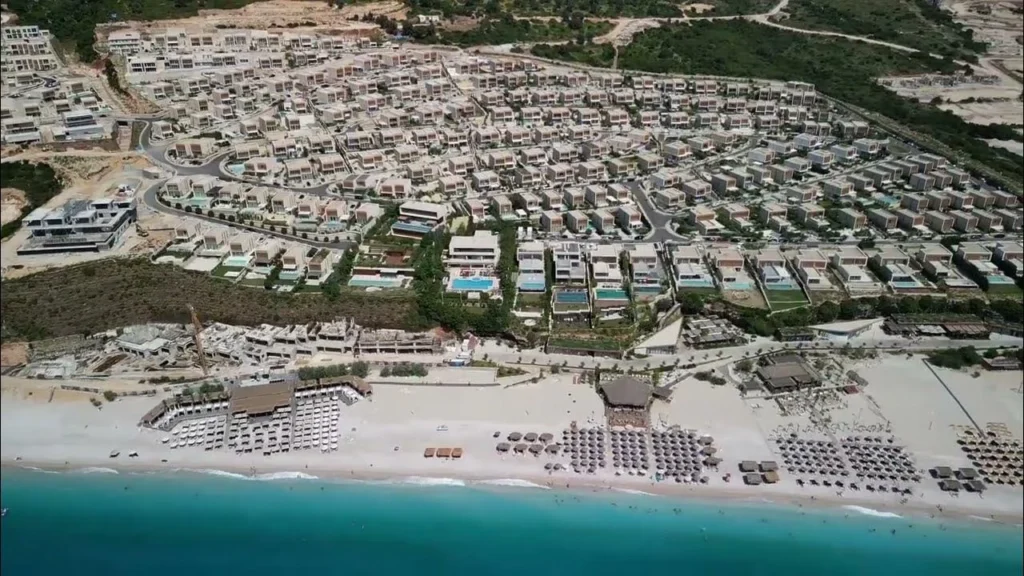
If this were truly a model of sustainable tourism, the resort would have been integrated with the existing village, allowing visitors to experience authentic local life. At a minimum, the investor should have been required to support the local economy: purchasing produce from villagers, employing local women to produce textiles and furnishings, and ensuring that the old village prospered alongside the new development. Instead, a new settlement emerged from nothing while the original community became poorer.
The Enclosure of Public Beaches
Like many strategic investments, developments such as Palasa do not integrate local communities. Instead, they fence off beaches and restrict access to areas that residents have used for generations.
Strategic investors increasingly treat the coastline as private property. This mentality was reflected in the infamous statement by former Minister Olta Xhaçka, who argued that people should not be able to come “from the top of the mountain” and place an umbrella in front of a major investment. Yet those people “from the top of the mountain” were often the very residents whose families had lived there for generations.
Although government officials themselves acknowledge that beaches and coastal sand are public property, throughout Albania influential investors have effectively taken control of the coastline, from Kakome to Kep Merli and beyond.
Moreover, these resorts function primarily during three summer months and contribute little to year-round tourism. If Albania truly seeks sustainable, year-round tourism, its greatest assets are cultural tourism, archaeological sites, and its rich natural heritage. German and Czech tourists visited Theth long before modern roads existed. Beach tourism alone cannot sustain the economy throughout the year.
So why are coastal megaprojects being presented as the key to Albania’s economic future?

Empty Promises and Jobs
What exactly is being offered to Albanians? Jobs.
Citizens are effectively told that their role is to become employees on land that once belonged to them. And if local workers become inconvenient, they can easily be replaced by cheaper foreign labor, a trend already underway.
This is not the first time such promises have failed. Kukës Airport was promoted as a transformational investment. Local residents were expropriated at around 140 lek per square meter—meaning five square meters were worth little more than a pack of cigarettes. They were promised prosperity, jobs, and development. Today, many feel they received none of those things. The airport has become something entirely different from what was promised, while those who lost their land have been left with little to show for it.

Citizens increasingly understand that expropriation is no longer synonymous with development; it often leads instead to dispossession and emigration.
The anger is therefore understandable. Many people have learned through experience that grand investment figures attached to projects that remain largely undisclosed rarely bring benefits to local communities.
One resident in the Kukës region recently asked why roads are being built toward remote mountain areas where no communities currently exist, apparently in preparation for future strategic investments, while his own village has been requesting basic road access for twenty years without success.
A government that has failed for decades to provide adequate services to existing communities—many of which still lack basic infrastructure and are steadily depopulating—cannot convincingly claim that strategic resort developments will suddenly improve local lives.
Albania certainly needs strategic investments, but investments that improve citizens’ quality of life: roads, railways, transport infrastructure, perhaps cable-car systems connecting mountains and valleys, better public services, hospitals, quality education, and policies that empower local people through guesthouses, agritourism, and community-based tourism experiences. Such investments would allow visitors to experience what Albanians hold most dear: hospitality.
From this perspective, the resort model being proposed has little to do with tourism. It is fundamentally about land acquisition. Villas are built, purchased by wealthy buyers, and transformed into private enclaves that ordinary Albanians cannot enjoy. Every deception eventually reaches its limit.
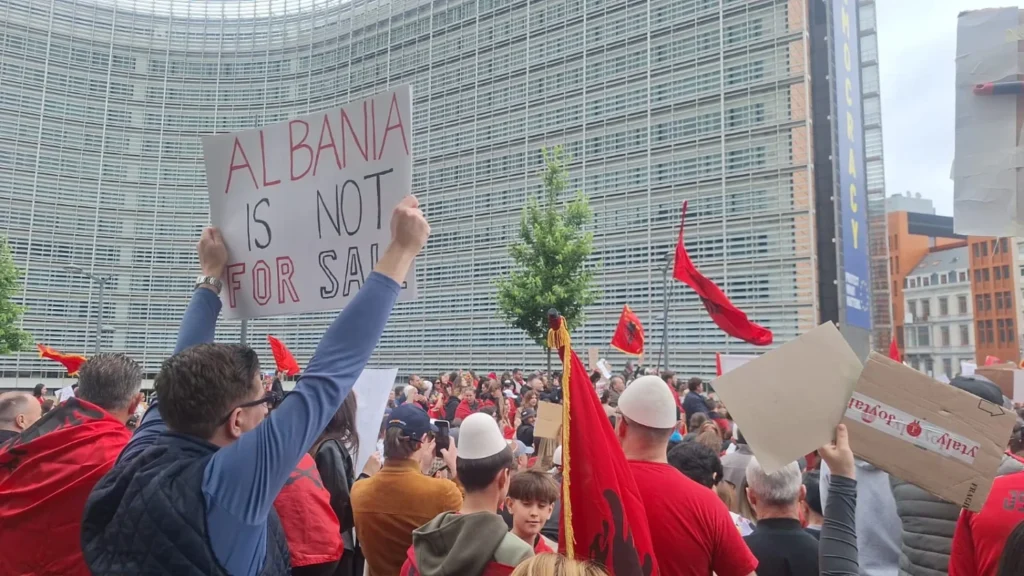
And this is the limit.


Other News to Read
Tirana Heritage Routes: 5+1 New Ways to Discover Tirana Beyond the City Centre
he Tirana Heritage Routes project presented five new thematic routes combining history, culture, heritage, nature, and local communities…
What to do in October 2026 in Tirana
Tirana, Hello Autumn! Welcome October! October in Tirana is a vibrant, colorful month — a lovely fusion of…
What to Do in Tirana in September 2026
What to do in September 2026 in Tirana . The month of Festivals and cultural activities
Tirana Castle: A Fortress with Ancient Roots
Tirana Castle: A Fortress with Ancient Roots. t is traditionally said to have been built in the 18th…