
Protest Tourism: One More Reason to Visit Tirana
July has been exceptionally hot in Tirana—not only because summer temperatures have climbed to nearly 40°C, but also because of the mass protests that have continued since the end of May.
In many countries, large demonstrations might be a reason to cancel a trip. In Albania, however, the opposite has happened. Over the past month, Tirana has become an even more attractive destination, with many visitors drawn by the peaceful protests demanding greater transparency over the government’s plans to develop large-scale tourism resorts along the country’s coastline.
What makes these demonstrations unique is their peaceful nature. Young people, families with children, and elderly citizens march together every evening, creating an atmosphere that is not only fascinating to observe but also welcoming to anyone who wishes to join. International television crews and journalists from around the world were among the first to cover the protests, interviewing participants and documenting the movement. Today, many foreign visitors have also become part of the experience.
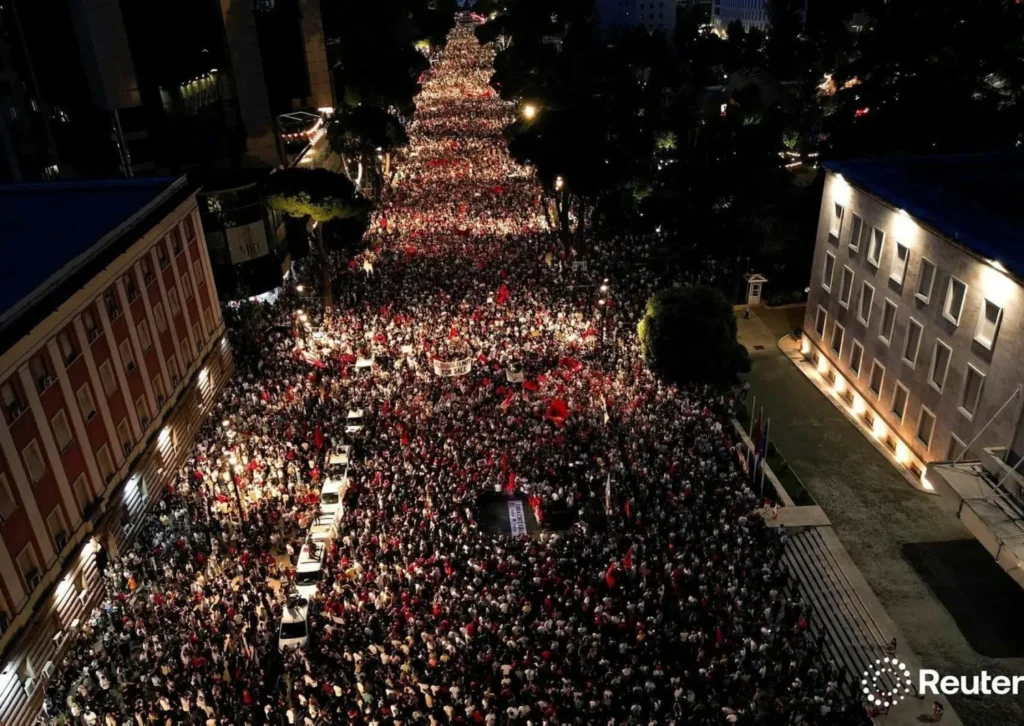
Not only have members of the Albanian diaspora planned their trips specifically to participate in the demonstrations, but many international tourists have found visiting Tirana during this period to be both meaningful and exciting.
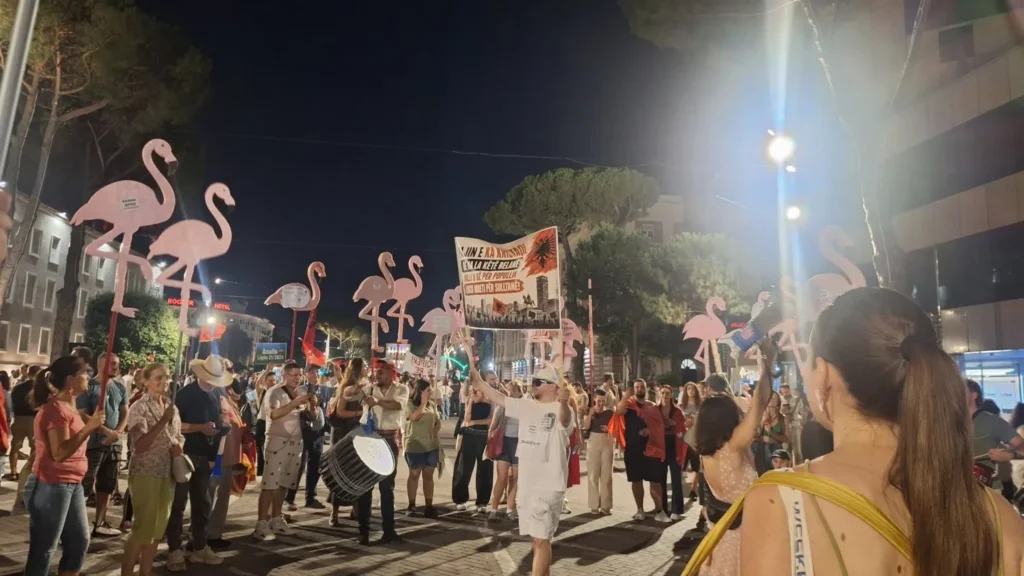
The movement has become known as the Flamingo Revolution, inspired by the flamingo, the bird that symbolizes the threatened ecosystem of the Narta Lagoon. Environmental activists fear that these protected wetlands could be irreversibly damaged if the large-scale urban development projects proposed for the area move forward.
The protests offer several distinctive experiences.
One of the most recognizable features is the group known as the Flamingos—young environmental activists carrying pink flamingo figures and banners calling for the repeal of Law 21/2024, which opened protected areas to tourism development. Every evening they sing, march, and move through the crowd, giving the demonstrations a unique visual identity.
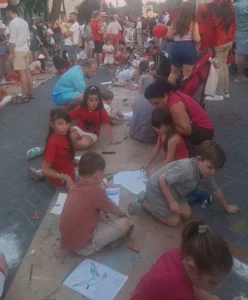
There are also dedicated spaces where children paint, play, and spend time with their families, demonstrating the peaceful character of the gatherings and showing that both protesters and visitors feel safe.

For many tourists, however, the highlight is the evening march. Beginning at around 8:30 p.m. and continuing until approximately 11:00 p.m., thousands of people walk through the streets of Tirana singing, chanting, and inviting residents from different neighborhoods to join them. Foreign visitors frequently participate as well. The march is open to everyone, regardless of nationality or political affiliation, and anyone can carry one of the many protest signs available, including those written in English.
These elements have led many observers to describe the phenomenon as “protest tourism.” Some visitors now travel to Albania specifically to witness firsthand a civic movement that has attracted international media attention and introduced a different image of the country to the world.
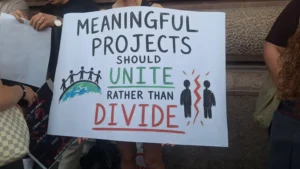
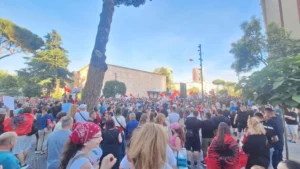
For many visitors, the demonstrations offer an opportunity to witness civic participation and peaceful public assembly, while also experiencing Tirana’s vibrant evening atmosphere.
The demonstrations have projected an image of Albanians as people who care deeply about their natural heritage, value their homeland, and seek accountability through peaceful and democratic means.
Increasingly, Albania is being seen as a symbol of civic resilience, solidarity, and democratic participation, where citizens use peaceful protest to demand greater responsibility from their elected leaders.
What to do
Visitors who attend the evening gatherings can walk freely among the crowd, observe speeches and performances, or simply follow the flow of the march through central Tirana. Many people join for part of the route, taking photos, listening to chants, or engaging in conversations with participants.
There are often informal activities in the main gathering area before the march begins, including music, visual symbols, and small artistic expressions connected to environmental themes. The atmosphere is open, and participation is voluntary, with no formal entry or registration.
Tourists can also choose to remain observers, watching from nearby cafés or public spaces along the route. The movement through the city streets itself becomes part of the experience, as central neighborhoods fill with people in the evening hours.
The movement through central Tirana becomes part of the city’s evening life, with different neighborhoods gradually filling with people as the march progresses.
As with any large public gathering, visitors are encouraged to remain aware of their surroundings, respect participants, and follow local guidance.

Other News to Read
What to Do in Tirana in September 2026
What to do in September 2026 in Tirana . The month of Festivals and cultural activities
Tirana Castle: A Fortress with Ancient Roots
Tirana Castle: A Fortress with Ancient Roots. t is traditionally said to have been built in the 18th…
Medieval Tirana- The Complex of Mosque and Clock Tower
At the beginning of the 19th century, Tirana became an arena of rivalry between the Toptani family and…
What to do in August 2026 in Tirana
August is the final month of summer in Tirana, bringing a different rhythm to Albania’s vibrant capital. While…