
Bastar- the place named after the King
The village of Bastar, located near the Tujani area, preserves an extraordinary find. Two ancient helmets, one Illyrian and the other Corinthian, were found in 1955, during agricultural work. Both in a nearby burial site, and today they are also located in the Tirana Archaeological Museum.
They were found in an area called Qytezë, on a hill in Middle Bastar. Archaeologist Adem Bunguri says that the two helmets from the 6th century BC belonged to princes or high commanders, since not everyone could wear them. They were very expensive, beautifully crafted and only very high-ranking people wore them. But the surprise that remains unsolved to this day is why two helmets, one Illyrian and the other Corinthian, are next to each other. How could two enemies be buried next to each other? What could have happened? While the Illyrian helmet is more regular, the Corinthian one has a dent near the eye and to this day this mark does not seem to have been touched up even by restoration. Did the same prince have them? Was there a duel, and the two princes were buried nearby? The paradox is that the location of the helmets is in Parthian territory.
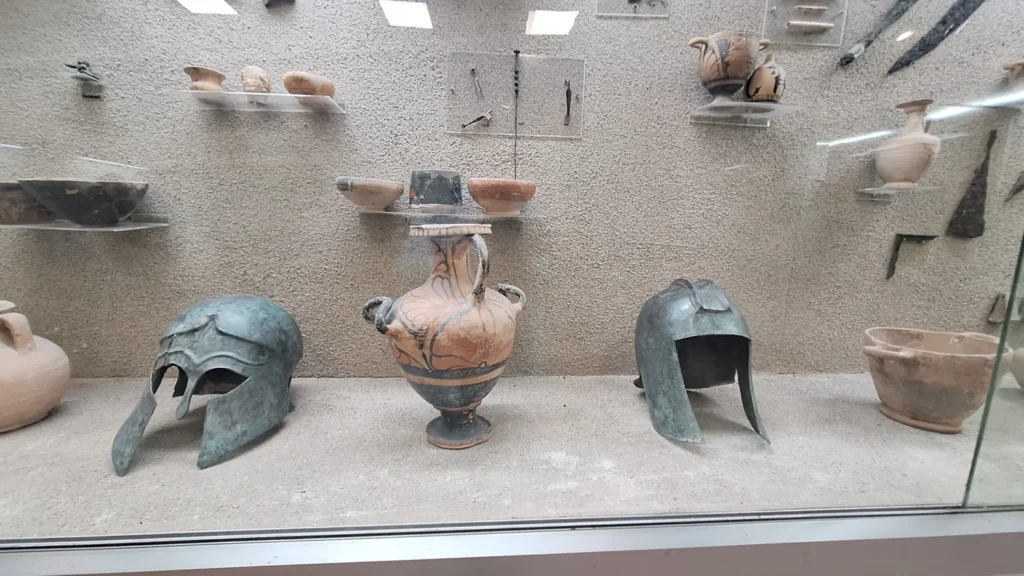
Hasan Ceka says that in the 4th century BC, a king of the Paionians is called by the name Bastar. The Paionians were an Illyrian tribe in North Macedonia, but how did the name Bastar arrive here in this territory of the Parthians? The king of the Paionians, Bastar, also minted his coin with the Illyrian helmet. Bastar means hut, settlement but also noble (Indo-European language). Another variant is that this king of the Paionians had both of these helmets with him, which were very valuable, and he may have lost his life here and was buried with them, and the city took his name. Two helmets, two tribes, one name Bastar. This entire area remains an enigma, as do the helmets in the Museum, which have no explanation.
A tourism destination
Zall-Bastari, an administrative unit located about 18 km from the capital, lies in a rugged mountainous area and consists of 12 villages.
Its hilly and mountainous landscape offers picturesque views. Along the hillsides and mountains, crossed by numerous valleys and slopes, villages and their neighborhoods can be clearly distinguished. The area covers a total surface of 132 km², including 785 hectares of agricultural land and 4,500 hectares of forests and pastures.
The most beautiful destination in this administrative unit is Bovilla Lake, a spectacular combination of hills, water, and panoramic scenery. In recent years, it has become one of the most popular nature destinations near Tirana.
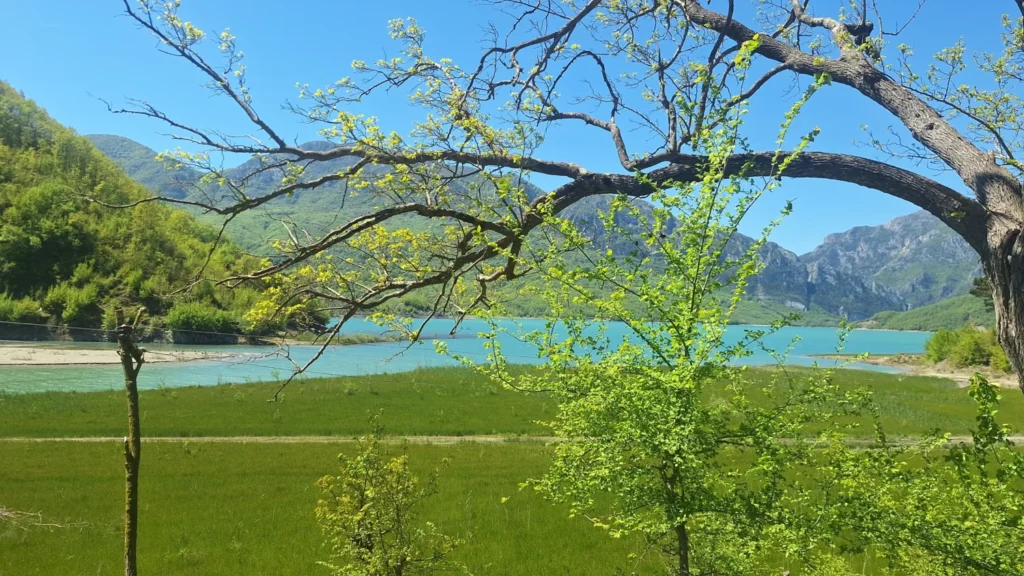
You can reach Bovilla from Bastar village either on foot or by off-road vehicle. The area remains a beautiful and largely untouched landscape. Visitors can enjoy picnics with friends or family in the green fields surrounding the lake while admiring the stunning natural environment.
Beyond the lake, visitors can continue towards the surrounding mountains. One recommended destination is the village of Vilëz, located close to the border between Tirana and Dibra. From this village, you can admire four mountain ranges: Dajti, Bovilla, Tujani, and Skanderbeg Mountain in Kruja. On clear days, you can also see Tirana and Durrës.
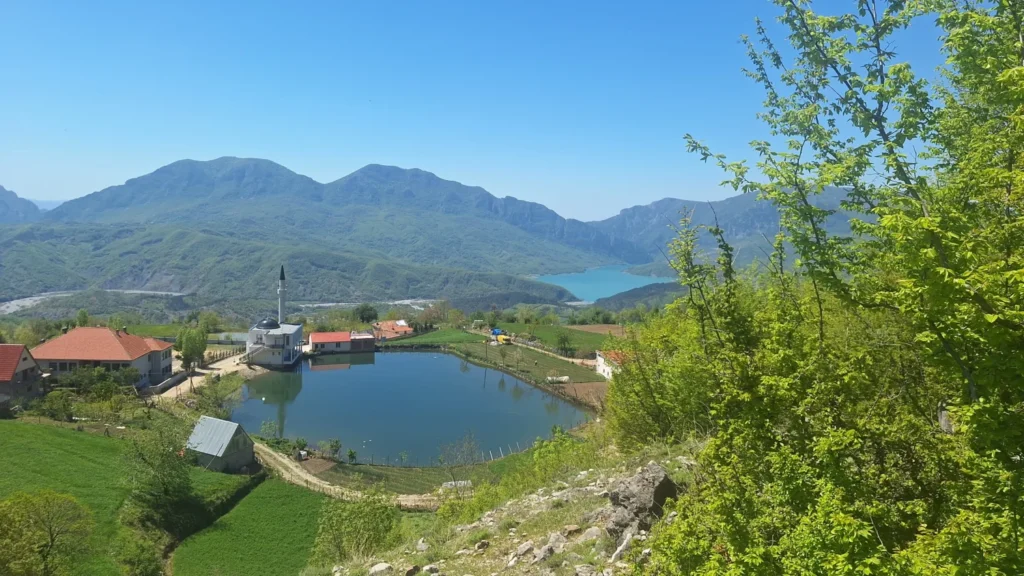
Apart from the magnificent views, the local community is close-knit and welcoming. The residents are known for their hospitality towards visitors. At the village restaurant, Shyqyri and his wife offer some of the finest traditional dishes, prepared according to recipes passed down through generations, including Byrek with Milk and Pule me Thërrime.
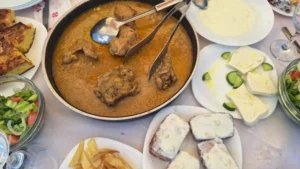
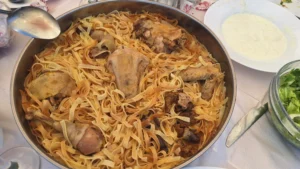
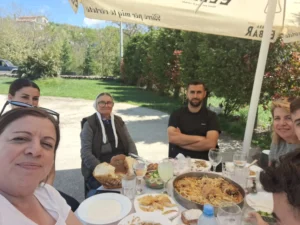
The journey to the mountains is not easy, as the road conditions are challenging. However, once you reach the top, you will be rewarded with breathtaking panoramic views. A visit is especially recommended during April and May, when the mountain valleys are covered with Poet’s Narcissus, a beautiful flower that grows at specific altitudes above sea level, creating a truly spectacular landscape.
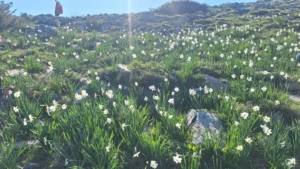
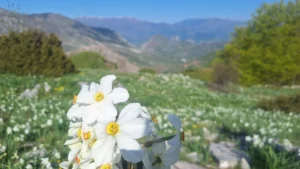
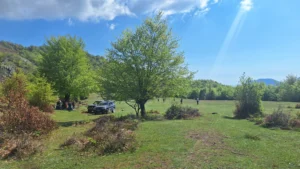
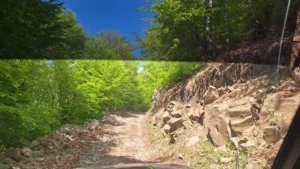
In the mountain villages of Tirana, life has preserved much of its traditional character. Visitors can feel it in the winding roads, the rugged mountains, the waterfalls, the untouched valleys, and the shepherds who still tend their flocks across the landscape. It is also reflected in the strong respect shown to the elderly, who continue to play an important role in community life, passing on their knowledge, skills, and traditions to younger generations.
Travelling through the villages of Tirana is always full of surprises. Here, visitors can experience authentic local life, breathtaking natural scenery, ancient history, and the warm hospitality of the people. Bastar itself preserves a remarkable story connected to its past. The tale of the two ancient helmets and the King of Bastar, after whom the village is believed to be named, is not merely a legend. The helmets were discovered in the area and are today preserved as authentic archaeological artefacts in the National Archaeological Museum, offering a tangible link to the region’s ancient history.
This article is part of the Tirana Heritage Routes, a project by DMO ALBANIA, in the framework of the BOOST Balkans program, implemented by ALDA and consortia, funded by AFD France
Disclaimer: The views, opinions and content expressed in this publication are those of the author(s) and do not necessarily reflect the official position of the European Association for Local Democracy-ALDA and Agence Française de Développement (AFD). ALDA and AFD are not responsible for any use that may be made of the information contained therein.



Tags:

Other News to Read
What to Do in Tirana in September 2026
What to do in September 2026 in Tirana . The month of Festivals and cultural activities
Tirana Castle: A Fortress with Ancient Roots
Tirana Castle: A Fortress with Ancient Roots. t is traditionally said to have been built in the 18th…
Medieval Tirana- The Complex of Mosque and Clock Tower
At the beginning of the 19th century, Tirana became an arena of rivalry between the Toptani family and…
What to do in August 2026 in Tirana
August is the final month of summer in Tirana, bringing a different rhythm to Albania’s vibrant capital. While…