
Bovilla Lake: Where Nature Meets Prehistory
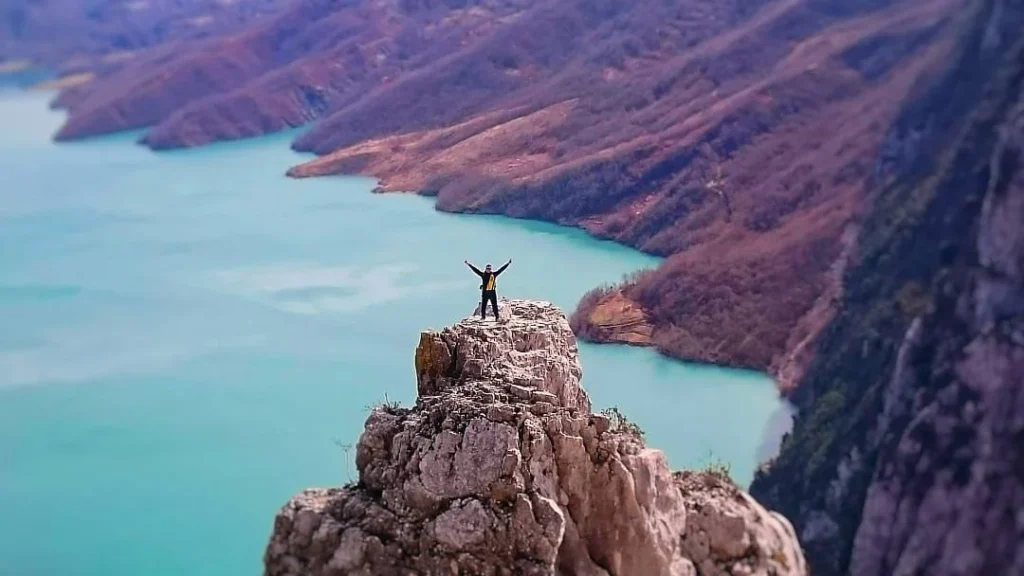
Bovilla Lake isn’t just one of the most spectacular natural attractions near Tirana — it’s also a prehistoric site. Albanian archaeologists have identified rock paintings to the right of the canyon, dating back to the prehistoric and protohistoric periods. Natural beauty with thousands of years of history behind it
According to the book Archaeologia 2000, by Neritan Ceka, Skender Mucaj and Luan Perzhita, Bovilla hides a mystery in its rocks.

Bovilla Rock Painting is located on the face of a massive rock, to the right of the Bovilla Gorge, near the village of Herraj. Bovilla Rock Painting is located 15 km north of Tirana, in the beautiful canyon formed by the Bovilla River. To the right of the canyon, about 100 m above the river level. rises a massive rock. The vertical side of the rock faces southeast and, at a height of 10-12 m, forms a small shelter. This is where the painting is found, and that is why it has been preserved. It is formed on a relatively large surface of rock (11 m x 5.30 m) and is divided into two parts. Shapes of circles with a cross in the middle or only separate crosses, are drawn in white paint on it and are preserved in good condition.
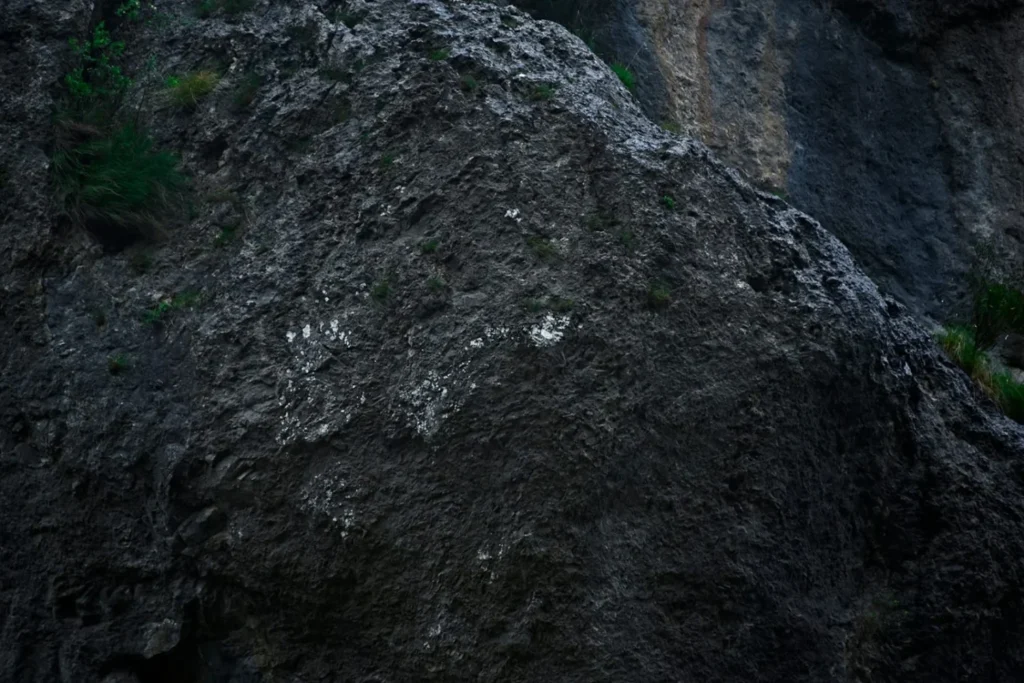
Conceptual similarities with the symbol of the sun, which are also found in the rock paintings of Rubiku, Reçi and Xibëri, as well as the use of white paint in the painting of Rubik and the painting of Zhlijeb (Bosnia) and Lipc (Montenegro), indicate that the Bovilla Painting was made during the prehistoric and protohistoric era. The rock painting of Bovilla is situated in an area where the ruins of some of the largest medieval churches in the area of Tirana are found, such as St Luke (Shuksi i Madh, Herraj), the Church of St Kolli (St, Nicolas) (Priska e Vogel), the Monastery of St. Mary (Kumardha), as well as other smaller ones in Shengjergji and Shën Gjoni (Herraj), or the eremite churches at the entrance to the Bovilla canyon, which most likely date back to the Middle Ages. Also, in the area where the paintings of Xiberi (Shkalle) and Rubik are located, there is a prominent tradition of eremitic monks.
Bibliography:
- Korkuti, Arti Shkëmbor në Shqiperi (The rock painting in Albania), Tiranë 2008.
This article is produced in the framework of the project #TiranaHeritageRoutes by DMO ALBANIA, a subgrant of the Boost Balkans program, implemented by ALDA Balkans, financed by AFD France.


Disclaimer: The views, opinions, and content expressed in this publication are those of the author(s) and do not necessarily reflect the official position of the European Association for Local Democracy-ALDA and Agence Française de Développement (AFD). ALDA and AFD are not responsible for any use that may be made of the information contained therein. www.dmoalbania.al www.visit-tirana.com
Tags:

Other News to Read
What to Do in Tirana in September 2026
What to do in September 2026 in Tirana . The month of Festivals and cultural activities
Tirana Castle: A Fortress with Ancient Roots
Tirana Castle: A Fortress with Ancient Roots. t is traditionally said to have been built in the 18th…
Medieval Tirana- The Complex of Mosque and Clock Tower
At the beginning of the 19th century, Tirana became an arena of rivalry between the Toptani family and…
What to do in August 2026 in Tirana
August is the final month of summer in Tirana, bringing a different rhythm to Albania’s vibrant capital. While…