
28 novembre 1912 – Il giorno che ha cambiato la storia dell’Albania
How Albania declared its independence in Vlora and how the first independent Albanian state came into being.
Every year, on 28 November, Albanians celebrate Independence Day, one of the most significant dates in the country’s national history. On this day in 1912, representatives from different Albanian regions gathered in the coastal city of Vlora to make a historic decision: Albania would be free and independent.
However, the Declaration of Independence was not an isolated event. It was the culmination of a long political, cultural and national struggle for self-government, identity and territorial survival.
Albania on the Eve of Independence
At the beginning of the 20th century, Albanian territories were still part of the Ottoman Empire, which was experiencing a deep political and military crisis. Demands for reforms, autonomy and recognition of national rights had intensified, particularly through the Albanian uprisings of 1910–1912.
Meanwhile, in October 1912, the First Balkan War broke out. Montenegro, Serbia, Greece and Bulgaria went to war against the Ottoman Empire. The armies of the Balkan states began occupying territories inhabited by Albanians, creating a real threat of partitioning Albanian lands. Under these circumstances, the Albanian question was no longer simply a demand for autonomy within the Ottoman Empire. It had become an urgent matter of national survival.
Ismail Qemali and the Road to Vlora
One of the leading figures of this period was Ismail Qemali, an Albanian politician and diplomat who had served for many years in the Ottoman administration. In November 1912, he undertook a historic journey towards Albania after conducting diplomatic contacts across Europe to seek support for the Albanian cause. Along the way, he met representatives of Albanian communities abroad and prominent national activists. On 5 November 1912, an important meeting of the Albanian colony in Bucharest took place, where the country’s future was discussed. Ismail Qemali subsequently travelled to Vienna, where he held meetings with representatives of Austria-Hungary.
The objective was clear: faced with the threat of occupation and the imminent collapse of the Ottoman Empire, Albanians had to take their future into their own hands.
28 November 1912 – The Declaration of Independence
On 28 November 1912, the National Assembly convened in Vlora, bringing together delegates from different Albanian cities and regions, as well as representatives of Albanian communities abroad. The meeting took place at the house of Xhemil Bey Vlora. Ismail Qemali, the principal initiator of the gathering, addressed the delegates about the dangerous situation facing Albania and the urgent need for a decisive political response. According to the historical document published by scholar Robert Elsie, the delegates unanimously resolved that Albania should, from that day onwards, be free and independent under a provisional government. The historic decision was accompanied by the raising of the Albanian national flag in Vlora, at the building where the assembly had taken place. It was the moment when the national symbol also became a symbol of the birth of a new state.
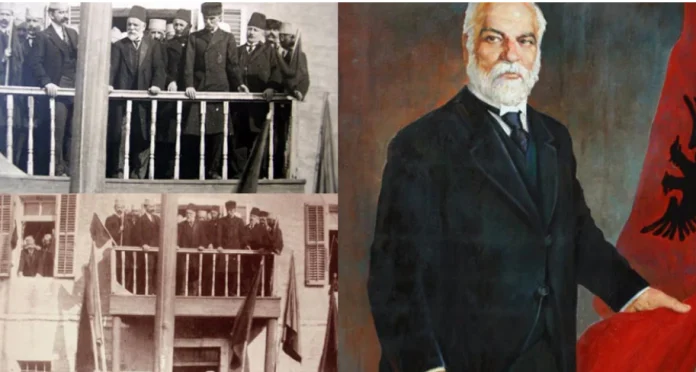
Who Were the Key Figures Behind Independence?
Albanian independence was the result of the efforts of numerous patriots and representatives, rather than the achievement of a single individual. Among the important figures of this period were:
Ismail Qemali – the political leader of the independence process and head of the Provisional Government.
Luigj Gurakuqi – patriot, intellectual and one of the prominent figures of the Albanian national movement.
Dom Nikollë Kaçorri – clergyman and patriot, elected deputy chairman of the Provisional Government.
Lef Nosi – patriot and activist for the Albanian national cause.
Isa Boletini – one of the best-known figures of Albanian resistance and the national movement.
Mid’hat Frashëri – intellectual and patriot, an important representative of the national movement.
The assembly represented an important unifying moment for Albanians from different regions and communities, transcending religious and regional differences.
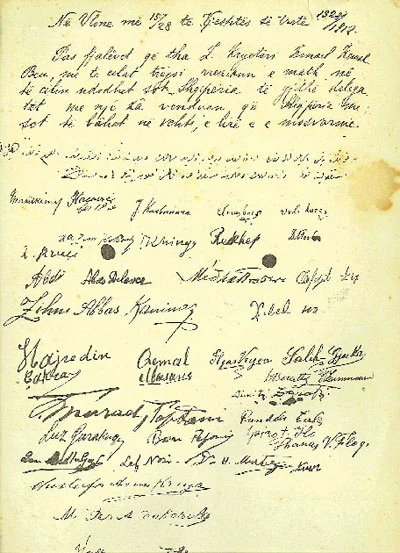
Tirana and the Road to Independence
Tirana was also part of the historical process that led to Albania’s independence. Representatives from Tirana attended the Assembly of Vlora, including Abdi Bey Toptani and Murad Bey Toptani. Historical documents from the period also record local declarations of independence in several Albanian cities during November 1912, including Tirana. A few years later, Tirana would assume an even more significant role in the history of the Albanian state. On 11 February 1920, following the decisions of the Congress of Lushnja, the central institutions of the state were established in Tirana, paving the way for the city to become Albania’s capital.
From the Declaration of Independence to International Recognition
The Declaration of Independence was a decisive step, but establishing a functioning state and securing international recognition required further diplomatic and political efforts. On 4 December 1912, the Provisional Government of Vlora was formally established, with Ismail Qemali as its head. It faced enormous challenges: the occupation of Albanian territories by foreign armies, the absence of a functioning state administration, economic difficulties and international uncertainty. The Conference of Ambassadors in London, which began its proceedings on 17 December 1912, addressed the Albanian question and the future borders of the country. On 29 July 1913, the Great Powers recognised Albania as a sovereign, neutral and hereditary principality, establishing an important foundation for the country’s international recognition. However, the determination of the new state’s borders left many territories inhabited by Albanians outside Albania, creating one of the most painful chapters in the history of the Albanian national question.
28 November – More Than a National Celebration
The Declaration of Independence on 28 November 1912 marked the end of one historical era and the beginning of another for the Albanian people. It represented not only the separation from the Ottoman Empire, but also the culmination of a long struggle for language, identity, national rights and self-determination. Today, more than a century later, Vlora remains the symbolic birthplace of the Albanian state, while 28 November continues to unite Albanians across the world. It is a day to remember history, the people who contributed to it, and the importance of preserving Albania’s national identity and heritage.
Tags:

Other News to Read
Identification and Documentation of Tirana’s Intangible Cultural Heritage”
Identification and Documentation of Tirana’s Intangible Cultural Heritage”
Cosa fare a settembre 2026 a Tirana
Settembre segna l’inizio di una nuova stagione culturale. Consultate il programma di teatri, gallerie, centri culturali e sale…